Since we tested (updated October 2026)
We filmed our test in 2022 (the video went up in November 2022). We haven’t re-tested our picks since, but we re-checked all four on October 10, 2026:
- All four are still sold on their makers’ own sites, and all were in stock (only the Snoozer Large in red was sold out).
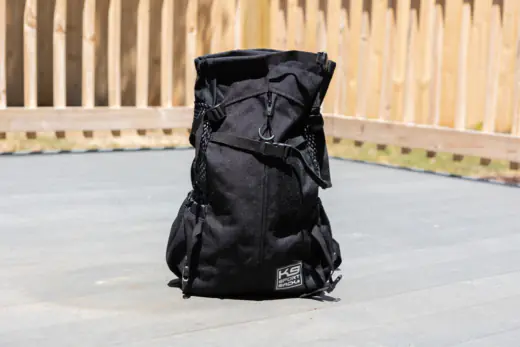
- Prices changed: the Petsfit went down ($65.99 → $56.35–$57.95), the Snoozer went up ($135.95 → $142.95–$153.95), and so did the K9 Sport Sack Air ($72.99 → $99.95). The Natuvalle Small is still $149.90.
- Corrected: we fixed product details that were wrong or out of date, including weight limits (Petsfit, Natuvalle, K9 Sport Sack), Snoozer’s sizes and colors, the K9 Sport Sack Air’s colors and features, and Natuvalle’s airline wording.
Other options worth knowing about (NOT tested by us): we haven’t tested these, so they’re not in our rankings.
- K9 Sport Sack Knavigate — K9 Sport Sack’s carrier with an internal frame and a padded hip belt, for dogs up to 50 lbs. $199.95 on K9 Sport Sack’s site.
- Kurgo G-Train Dog Carrier Backpack — a daypack with a pet compartment for dogs up to 25 lbs, plus a padded laptop sleeve, water bottle holders, a hip belt, an interior tether and a waterproof bottom. $144.95 on Kurgo’s site, with Kurgo’s lifetime guarantee.
- Fido Pro Airlift Original V2 — not an everyday carrier but a packable emergency sling, so one person can carry an injured or worn-out dog off a trail. Fido Pro says it’s designed for dogs up to 120 lbs and for emergencies, not extended everyday use. $99 on Fido Pro’s site.
Owner feedback
We searched Reddit for owners talking about these carriers and dog backpack carriers in general. We left out posts that read like ads.
K9 Sport Sack
- An Australian Cattle Dog owner said their 4-year-old with hip dysplasia gets so excited about the K9 Sport Sack that she rolls around on it when it comes out (r/AustralianCattleDog, Sep 2026).
- In the same thread, an owner of a 27-lb mix said theirs is “fine,” but their dog doesn’t love it and it isn’t very comfortable to wear because it has little structure. They found K9 Sport Sack’s higher-end model, with a frame and a hip belt, much nicer (comment). Another owner said the size chart seemed off: they ordered the recommended size and had to put a folded towel in the bottom so their dog didn’t sink into the bag (comment).
- A hiker said the Air was comfortable, light and breathable for 30 minutes to an hour with a 20-lb dog (r/hikingwithdogs, Jul 2025).
- The owner of an older toy poodle said their K9 Sport Sack works for shorter trails, but they don’t like how upright it holds their dog (r/hikingwithdogs, Sep 2025). Another owner cautioned that the vertical position can put pressure on a dog’s spine with heavy use, especially for long-backed breeds prone to IVDD (r/tripawds, Sep 2026).
Petsfit
- Comparing a Petsfit backpack with a Pecute, an owner who’d had both said the Petsfit is a lot more comfortable for hiking and has more structure, so it’s easier to get a pet in and out (r/adventurecats, Oct 2022).
- An early Petsfit owner liked how it worked but found the back fairly rigid and had nowhere to put a water bottle (r/adventurecats, Apr 2019).
Kurgo G-Train (not tested by us)
- A hiker with a 20-lb border terrier said they’ve used a G-Train for about 1,000 miles over 2 years. When it started to fail, Kurgo replaced it without asking for the old one back (r/hikingwithdogs, Sep 2025). The owner who asked the question later bought one and said their dog loves curling up in it with her head out (comment).
Fido Pro Airlift (not tested by us)
- A Shiba Inu owner used the Medium to carry their tired 20-lb dog part of the way on a rocky hike in Acadia National Park and said it was easy to use: the legs go through four holes and you buckle it into arm loops (r/BackpackingDogs, Sep 2024).
Natuvalle and Snoozer
- We didn’t find owner posts about these two carriers on Reddit when we checked.
Posts checked October 10, 2026. Paraphrased; usernames left out.
How to choose a dog backpack carrier
When picking the perfect backpack carrier for you and your dog, there are many factors to keep in mind. Because every dog is unique in size, we’ve opted to look at the more general features of the backpack harness in order to help you decide which one to go with. We also thought it was important to only include those with a lot of feedback and have been tested by real owners.
Weight Capacity
Picking a backpack that can support your dog is very important. Make sure you know your dog’s weight and size before you start to shop! Many carriers are optimized for specific sizes, so spare yourself the disappointment of finding the perfect pack only to discover that it just won’t fit by knowing exactly what you’re looking for from the get-go.
Keep in mind that you may be able to physically fit your dog into a carrier under its weight class–but it doesn’t mean you should. In an ideal world, your dog will sit comfortably within the range a carrier is approved for. If your pup is above (or even maxes out) the weight capacity, you may run into problems down the road with breaking or tearing. For this reason, we have listed max weights and how well the backpacks hold up.
Safety
This is very important. Ensuring your dog has good ventilation while in the carrier can’t be overstated. The last thing we want is for you to go hiking and then find out that your dog is hyperventilating due to lack of air. Likewise, a good carrier will have safety leashes in place to make sure that, even if the flap is opened, your pup won’t escape halfway through your travel.
Strap Design
Even the daintiest teacup-sized pups can feel heavy overtime. To spare yourself pain down the road, pay attention to the backpack straps. In this category, we’re looking at fit (is it like a traditional backpack, or more of a sling?), padding, security (are there additional chest and waist straps?), and any other special features called out by the manufacturer.
Material
It might seem basic, but material is always critical to determining quality and durability. To know what the ideal material is for your specific needs, you should know the circumstances in which you plan to use the carrier–for example, on hikes, you want something soft but durable.
Sizes
Some carriers are specifically designed with only one size of dog in mind, while others have a wide range of sizes to accommodate more kinds of pups. In this section, we list out how many sizing options are offered to give you a sense of the specific backpack’s flexibility.
Back-Facing, Front-Facing, & Rolling
How do you want to carry your pup? Are you looking for traditional back-facing backpack, or do you want your pup to chill on your stomach? Or, would you prefer roll your little guy alongside you? All three styles come in handy for different situations. Below, we’ve gone into when you’d might like each.
Back-Facing
This type of backpack carrier is what you would consider when you think of your typical backpack. Most on the market are supported with shoulder straps and have side mesh panels for air ventilation. If you are going to be moving from indoors to out, starting and stopping, and have a medium-weight dog, this is a solid choice.
Front-Facing
This is the “kangaroo” option of backpack carriers. If you have a little dog and/or plan to do hiking, this is a very popular option. For hikers, carrying your dog in the front means you can still wear your traditional hiking pack on your back. For other owners, a front-facing pack lets you keep a close eye on your pup at all times, giving a stronger sense of security.
Rolling
A rolling carrier resembles a suitcase with wheels and often has the option to be carried like a backpack (although they tend to be optimized for rolling and are not the most comfortable for carrying). These are convenient if you don’t want the constant pressure on your back over an extended period of time–for example, in airports. Unfortunately, it’s also important to keep in mind that you can’t easily take rolling carriers on stairs or outdoors.
Flying With Your Dog
All airlines have different guidelines on the proper way to bring a pet on board, so be sure to check your airline’s rules (PetTravel keeps a list of airline pet policies). But regardless, there are always two things to keep in mind: the carrier should be comfortable for you to carry and should fit under the seat in front of you.
Some backpack carriers are designed specifically for airplane travel and others try to use it as a marketing trick but don’t follow through. Overall, we’ve taken this into account and have scoured through the reviews to ensure that the ones that claim to be excellent for flying actually live up to that standard.
Likewise, we wanted to compile the links for the most common American airlines so that you could see these guidelines for yourself. The last thing you want to do before flying with your dog is to find out that the traveling carrier won’t work.
Delta
United
American Airlines
JetBlue
Southwest
Frontier
Allegiant
Hiking and Traveling Outdoors
We all know it’s fun to let your dog off leash and explore all the wonders of nature, but that isn’t always safe nor is it the right choice for every dog. More time than not, it’s better to just bring the right kind of equipment and carry your dog alongside you so that they can take it all in.
Many of the carriers designed for hiking will have additional support straps for the chest and waist. Another factor to keep in mind is ventilation–nobody wants a sweaty back if it can be helped! Plus, it is essential that you and your pup stay cool and don’t overheat.
Adventure Time
Being prepared with the proper backpack carrier can make taking your dog on trips a breeze. With the proper fit and great ventilation, you and your dog could go almost anywhere together.
We hope that this guide has helped you pick the backpack carrier for your needs! Be sure to let us know which one you went with to go on your adventures.
Dog backpack carrier FAQ
What is the best dog backpack carrier?
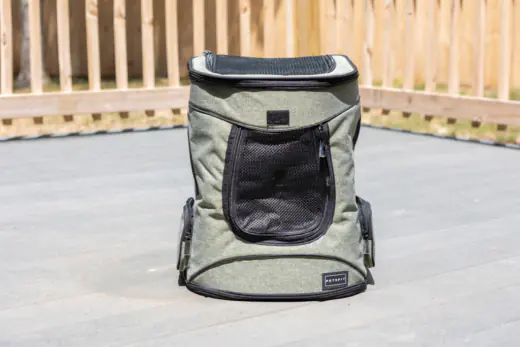
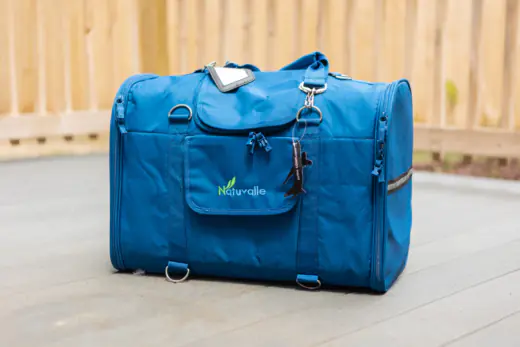
Of the more than 15 carriers we tested, the Petsfit Dog Backpack Carrier was our favorite. It’s sturdy, it was comfortable to wear, and it has a flat, stable bottom, a built-in safety leash and four mesh windows, for pets up to 18 lbs. If you want more ways to carry, the Natuvalle 6-in-1 works as a backpack, a front pack or a shoulder bag.
What is the best dog carrier backpack for hiking?
For a small dog, look for a structured carrier with a hip belt and a chest strap, so the weight sits on your hips, plus good ventilation and an inside leash. Of our picks, the Petsfit has all of these. The K9 Sport Sack Air is light and popular with hikers, but its soft bottom isn’t for every dog. For bigger dogs, carriers with a frame and hip belt are made for longer trips (see “Since we tested”), and many hikers also pack an emergency sling.
Should I get a front-facing or back-facing dog carrier?
A front carrier lets you keep an eye on your dog and still wear a regular pack on your back, so it’s popular with hikers who have small dogs. A backpack is easier for longer carries. We liked the Natuvalle best as a front pack. In the K9 Sport Sack, your dog rides on your back facing forward.
Are dog backpack carriers airline approved?
Some makers call their carriers airline approved, but each airline sets its own rules and under-seat size limits. For example, American Airlines lists 18 x 11 x 11 inches for soft-sided carriers, and Allegiant lists 18 x 12 x 11 inches. On paper, the Natuvalle X-Small and Small fit those numbers, while the Petsfit (17.5 inches tall) and the Snoozer (20 inches or taller) don’t. Always check with your airline before you fly (see our airline links below).
How heavy a dog can I carry in a backpack carrier?
It depends on the carrier and on you. Our picks are made for small dogs: up to 18 lbs for the Petsfit, 8 to 24 lbs for the Natuvalle depending on the size, and 15 or 30 lbs for the Snoozer. K9 Sport Sack sizes the Air by back length instead of weight. Pick a size your dog sits comfortably in, not one it maxes out.
Are backpack carriers safe for my dog’s back?
A carrier with a firm, flat bottom lets your dog sit or lie in a natural position. Upright, legs-out carriers put more of your dog’s weight on its back and hips, so keep rides short and watch for signs your dog is uncomfortable. If your dog is long-backed (like a dachshund), older, or has back or joint problems, ask your vet before you use one, and get your dog used to the carrier at home before your first trip.