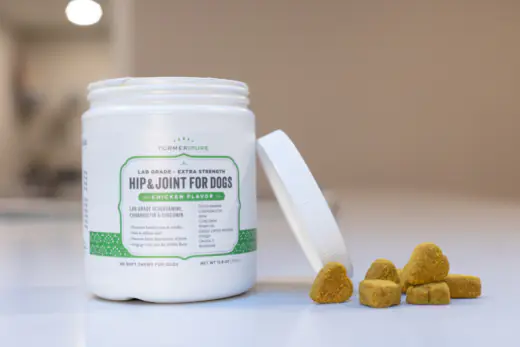
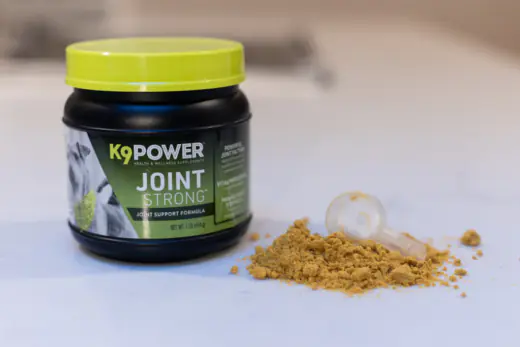
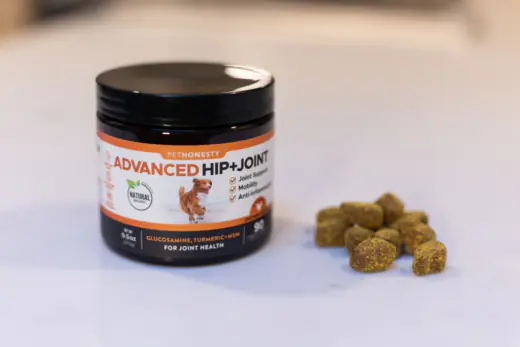
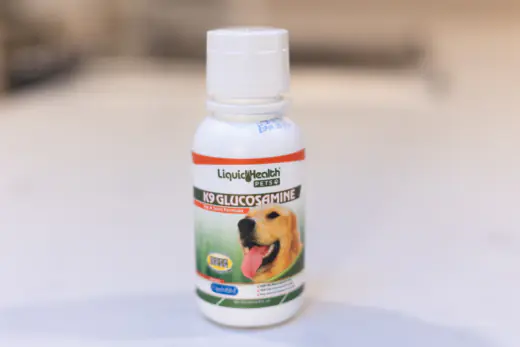
Since we compared them (updated October 2026)
We bought and compared these 5 supplements in 2022 (the video went up in November 2022). We haven’t re-tested them since, but we re-checked all five on October 11, 2026:
- Turmeripure was sold out in every size on its own site. We’ve kept it as our top pick, removed its price button, and will update this page if it doesn’t come back.
- Prices changed: K9 Power is now from $29.99 (we listed $28), PetHonesty $32.99 ($27), Liquid Health $19.95 for 16 oz ($30) and Cosequin from $19.99 ($22).
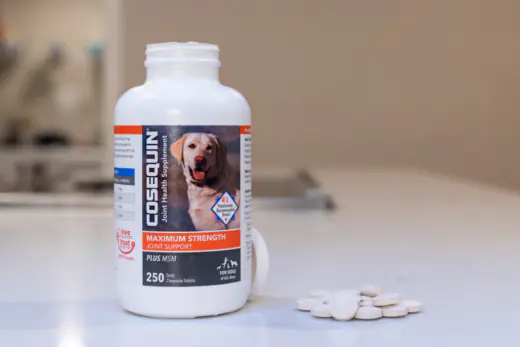
- New names and links: PetHonesty now sells Hip + Joint Health, Liquid Health moved its product page, and Nutramax calls our Cosequin pick “Cosequin for Dogs Plus MSM Chewable Tablets”.
- Corrected: we removed health claims we couldn’t back up, added what the research actually says, and fixed the NSAID side-effects section using the FDA’s information.
Other options worth knowing about (NOT tested by us): we haven’t tested these, so they’re not in our rankings.
- Dasuquin with MSM Soft Chews — Nutramax’s step up from Cosequin, with glucosamine, chondroitin and MSM plus avocado/soybean unsaponifiables (ASU), boswellia and green tea extract. Owners on Reddit often mention it alongside Cosequin. Nutramax’s site links to retailers and vets rather than listing a price.
- Omega-3 fish oil — not a single product, but the joint supplement with the strongest evidence for dogs in the reviews we cite below. Ask your vet which product and dose to use.
- Adequan Canine — not a supplement: a prescription injection your vet gives. Its maker, American Regent, says it’s FDA-approved. Ask your vet if it’s an option.
What the research says
Glucosamine and chondroitin are among the most popular joint supplements for dogs, but the studies don’t all agree:
- A 2007 trial found a benefit. In a study of 35 dogs with osteoarthritis, dogs given glucosamine and chondroitin had less pain and better weight-bearing by day 70, though they improved more slowly than dogs given the prescription painkiller carprofen (McCarthy et al., The Veterinary Journal).
- Reviews of all the studies are less positive. A 2012 review found the evidence for most joint supplements in dogs was weak, with omega-3 fatty acids the most promising (Vandeweerd et al., Journal of Veterinary Internal Medicine). A 2022 analysis of 72 trials in dogs and cats with osteoarthritis found clear pain relief from omega-3s, but “a very marked non-effect” for chondroitin and glucosamine, and said they “should no longer be recommended” for pain management (Barbeau-Grégoire et al., International Journal of Molecular Sciences).
- Quality varies. Joint supplements aren’t approved drugs, so the label is the company’s word. The NASC Quality Seal means a company passed an independent quality audit and random product testing, which checks quality, not whether the supplement works.
Our take: some owners see a difference and many vets are comfortable with these supplements, but the evidence is mixed, and a supplement is not a treatment for arthritis. Talk to your vet, keep your dog at a healthy weight, and use a supplement alongside, not instead of, the care your vet recommends.
Owner feedback
We searched Reddit for owners talking about these supplements. We left out posts that read like ads. These are owners’ experiences, not evidence that a supplement works.
Cosequin
- An owner who has used Cosequin on 4 dogs over the years said it took two weeks of the loading dose before they saw their dogs move around more comfortably (r/seniordogs, Jun 2024). A Rottweiler owner said they saw a noticeable difference after about 3 weeks (r/seniordogs).
- Not everyone saw a change: one owner “couldn’t really tell if they helped” (r/DogFood, Sep 2025), and another stopped because they weren’t doing any good for their dog with hip dysplasia (r/DogFood).
- Owners mention a strong smell, chews that arrived hard, and dogs that suddenly refuse them; several crumble them into food (r/seniordogs).
- One owner summed it up: “They are a supplement and NOT a medication replacement” (r/DogFood).
Cosequin vs Dasuquin
- In a question to vets, a commenter explained that Dasuquin with MSM adds ASU, MSM and green tea extract to the Cosequin formula (r/AskAVeterinarian, Jun 2026).
Liquid glucosamine for picky dogs
- When an owner asked for a liquid supplement for a picky dog, one reply suggested asking the vet about Adequan injections instead (r/dogs, Oct 2021).
Turmeripure, K9 Power, PetHonesty and Liquid Health
- We didn’t find owner posts about these that weren’t ads when we checked.
Posts checked October 11, 2026. Paraphrased; usernames left out.
How to choose a glucosamine supplement
Start with your vet. Before starting a joint supplement, have your vet examine your dog to rule out other causes of limping or stiffness. Ask first if your dog has a health condition like diabetes, takes other medication (PetHonesty, for example, says not to use its chews with anticoagulants), or has a shellfish allergy, since most glucosamine comes from shellfish.
Know the ingredients. Glucosamine is an amino sugar found naturally in cartilage. Supplements use glucosamine sulfate or glucosamine hydrochloride (HCl); K9 Power uses sulfate, and three of our picks use HCl. It’s commonly paired with:
- Chondroitin, another building block of cartilage
- MSM (methylsulfonylmethane), a sulfur compound
- Hyaluronic acid, a natural part of joint fluid
- Turmeric (curcumin), added for its anti-inflammatory reputation, though there’s little research on it in dogs
- Omega-3s (fish oil or green-lipped mussel), which have the strongest evidence of the group in the reviews we cite above
Read the label. The supplement should list every ingredient and how much is in each dose. Look for a company that names where it’s made and how it checks quality, like third-party testing or the NASC Quality Seal. Many owners prefer to skip supplements with added sugars, artificial preservatives such as BHA, BHT and ethoxyquin, and artificial colors.
Pick a form your dog will take. Most glucosamine supplements come in one of these forms:
- Soft chews: meat-flavored like a treat and easy to give, but you often need several a day for bigger dogs, and some arrive harder than expected.
- Chewable tablets: usually cheaper per dose; you can crumble them into food if your dog won’t chew them.
- Powders: sprinkle on food or mix with water into a gravy; some dogs notice the taste.
- Liquids: easy to mix into food for dogs that won’t take pills or chews; check how long it lasts once opened.
Give it time, and keep track. Makers like Nutramax recommend a higher starting dose for the first 4 to 6 weeks. Keep notes on how your dog gets up, walks and handles stairs, and talk to your vet if you don’t see a change or things get worse.
Don’t stop your dog’s medication. If your vet has prescribed a pain reliever like an NSAID, keep giving it as directed. The FDA lists possible NSAID side effects in dogs, including vomiting, diarrhea, stomach ulcers, and kidney and liver problems, and says to watch for them and call your vet (FDA). That’s a conversation to have with your vet, not a reason to swap medication for a supplement.
Glucosamine for dogs FAQ
What is the best glucosamine for dogs?
Of the 14 supplements we reviewed and 5 we bought, our top pick is Turmeripure Lab Grade Glucosamine Chondroitin Chews, though it was sold out on the maker’s site when we checked. Our favorite powder is K9 Power Joint Strong, and Cosequin Plus MSM is a widely available, long-time brand. The best one for your dog is the one your vet is comfortable with and your dog will actually take.
Does glucosamine chondroitin work for dogs?
The evidence is mixed. A 2007 trial in 35 dogs with osteoarthritis found glucosamine and chondroitin helped with pain and weight-bearing by day 70, but a 2022 analysis of all the studies found no effect on osteoarthritis pain and found better evidence for omega-3s. Some owners see a difference; others don’t. Talk to your vet before relying on a supplement.
What’s the best vet-recommended glucosamine for dogs?
Nutramax says Cosequin is the #1 veterinarian-recommended retail joint health supplement brand, based on its own survey, and owners often mention their vets recommending Cosequin or Dasuquin. Your own vet knows your dog’s history, so ask them which product and dose they’d use.
What’s the difference between glucosamine and chondroitin?
Both are building blocks of cartilage. Glucosamine is an amino sugar, usually made from shellfish; chondroitin is a larger molecule found in cartilage. Most dog joint supplements combine the two, often with MSM.
Does glucosamine have side effects in dogs?
Makers list few, but some dogs get an upset stomach, and most glucosamine comes from shellfish. PetHonesty warns that its chews may irritate the stomach and shouldn’t be used with anticoagulants, and Liquid Health says to stop and contact your vet if lameness gets worse. Ask your vet first if your dog has diabetes, a shellfish allergy or takes other medication.
How long does glucosamine take to work in dogs?
There’s no guarantee it will. Nutramax recommends a higher starting dose of Cosequin for the first 4 to 6 weeks, and owners on Reddit say they noticed changes after 2 to 3 weeks, if at all. If you don’t see a difference after a couple of months, or your dog gets worse, talk to your vet.
When should I start my dog on glucosamine?
Talk to your vet. K9 Power says its powder is for dogs 6 months and older, and some owners start large breeds as adults, but supplements are most often used for older dogs or dogs with joint problems your vet has diagnosed.