Since we tested (updated October 2026)
We filmed our test in 2022 (the video went up in October 2022). We haven’t re-tested our picks since, but we re-checked all four on October 10, 2026:
- All four are still sold on their makers’ own sites, and all were in stock.
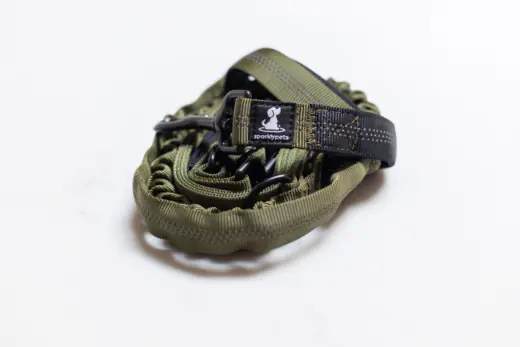
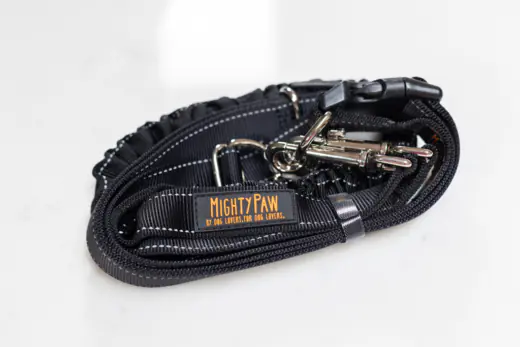
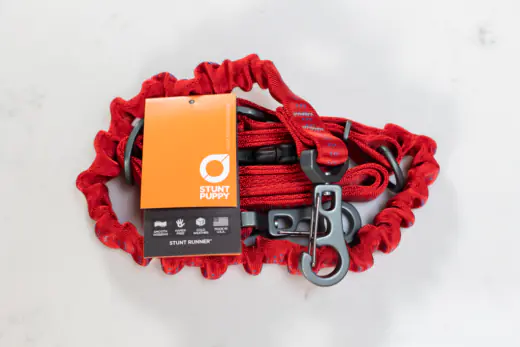
- Prices went up for the Stunt Runner ($48 → $55) and Tuff Mutt ($23 → $27.97). SparklyPets is $23.95, and Mighty Paw is $18.99–$22.50.
- Corrected: we fixed some product details that were wrong, including the Mighty Paw’s guarantee (30 days, not 90), extras it doesn’t come with (a two-dog splitter, a leash hook), and Tuff Mutt’s color count.
Other options worth knowing about (NOT tested by us): we haven’t tested these, so they’re not in our rankings.
Owner feedback
We searched Reddit for owners talking about these leashes and hands-free leashes in general. We left out posts that read like ads.
Stunt Puppy Stunt Runner
- A runner who’d tried a lot of hands-free leashes said the Stunt Runner was their favorite. They like that the length adjusts (short on busy routes, longer on trails) and that the leash unclips from the belt so they can hold it on steep downhill sections. It held up to heavy use for over a year (r/RunningWithDogs, May 2021).
- Another runner said it has just the right amount of bungee and its belt shifts on their hips less than their Ruffwear one, but added that the differences between hands-free leashes are minor (comment).
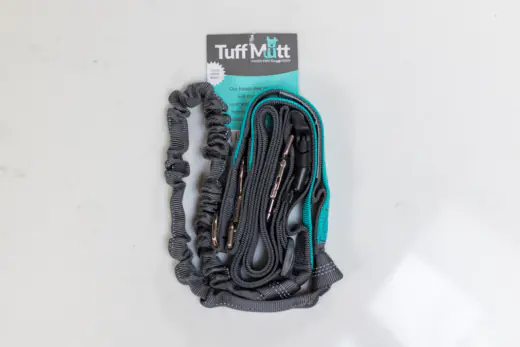
Tuff Mutt
- One runner’s dog stays close, so the 4-foot leash had too much slack and kept tangling under the dog’s leg. They ended up holding the leash half the time (r/RunningWithDogs, Feb 2020).
- A smaller runner with a husky mix that pulls said her Tuff Mutt belt kept riding up from her hips to her mid-torso, so she was shopping for a canicross belt (r/RunningWithDogs, Apr 2025).
Mighty Paw
- The owner of a strong Great Pyrenees said a Mighty Paw waist leash with a bungee lead and a harness made walks much easier. With the leash around their core instead of in one hand, they walked more naturally and had more control when she leaped after something (r/Dogtraining, Jun 2020).
SparklyPets
- We didn’t find owner posts about the SparklyPets leash on Reddit when we checked.
Hands-free leashes in general
- A 70-year-old owner whose dog suddenly bolts after prey said a waist leash keeps her upright and less likely to fall, and its bungee keeps it from hurting her back (r/goldenretrievers, Aug 2026).
- Others in the same thread were more cautious. One owner hurt their back when their dog jerked the leash and now says hands-free leashes are only for well leash-trained dogs (comment), another pointed out you can’t let go to fall safely if you’re pulled off your feet (comment), and an owner of reactive dogs said a hip leash is insurance against a dropped leash, not a fix for pulling (comment).
- A runner of six years believed back strain from their waist leash led to a hamstring problem. Other runners suggested a canicross belt, which sits lower on the hips (r/RunningWithDogs, Feb 2024). In another thread, an owner who switched to a canicross belt with leg loops said it ended their lower back pain, though their dog can no longer circle around them (r/RunningWithDogs, Feb 2022).
Posts checked October 10, 2026. Paraphrased; usernames left out.
How to choose a hands-free running leash
Running with your dog can be an incredible, exhilarating experience–as long as you have the right equipment to stay safe. From bungees to waist belts, dual handles to D-rings, there are many components to consider when choosing the right running leash for you.
When assessing hands-free running leashes, we wanted to find an option that will allow you to have comfortable runs without losing control over your dog. Below are the criteria we considered, starting with what we believed to be the most important factors.
Material
On daily walks, you want to know your leash isn’t going to give out on you–and this only becomes more paramount when you add in some speed.
Nylon is the most common material for running leashes, but it’s important to read the details: not all nylon is created equal. Some of the leashes will sport a high-quality waterproof nylon with reinforced stitching, while others will just feature basic nylon, which isn’t ideal for long-term wear and tear.
Since we’re looking at hands-free leashes, many times the leash will connect to a belt around your waist. The material here matters for making sure adjustments stay in place (metal or plastic buckles) and that the leash stays connected.
Visibility
Staying visible is one of the key factors to being safe while running with your dog. Many running leashes feature reflective stitching throughout the entire leash and waist belt, but there are some options that come in bright non-reflective colors. When deciding what is best for you, we recommend you carefully consider the environment in which you’ll be running.
Hands-free
It’s difficult to run and keep a grip on a leash at the same time, which is why we are specifically looking at leashes that are hands-free. As we said before, most hands-free running leashes use a waist belt–but not all. For this criteria, we’re looking at the specific hands-free design (waist belt or other?) and the size of the waist belt.
Leash Clip
Keeping your leash safely secured to your waist belt (or other hands-free device) is a priority. For this criteria, we evaluated how the leash attached. Is it reinforced? Additionally, some running leashes will “glide” along the waist belt to give you and your dog more freedom and ease stress, while others are secured in place for added control.
Leash Length
This may seem generic, but it’s extremely important. If you run in a crowded city, you likely want a leash that’s shorter to maintain control. But, if most of your running is in a less densely populated area, a longer leash may give you and your dog a bit more freedom.
How Running Leashes Work
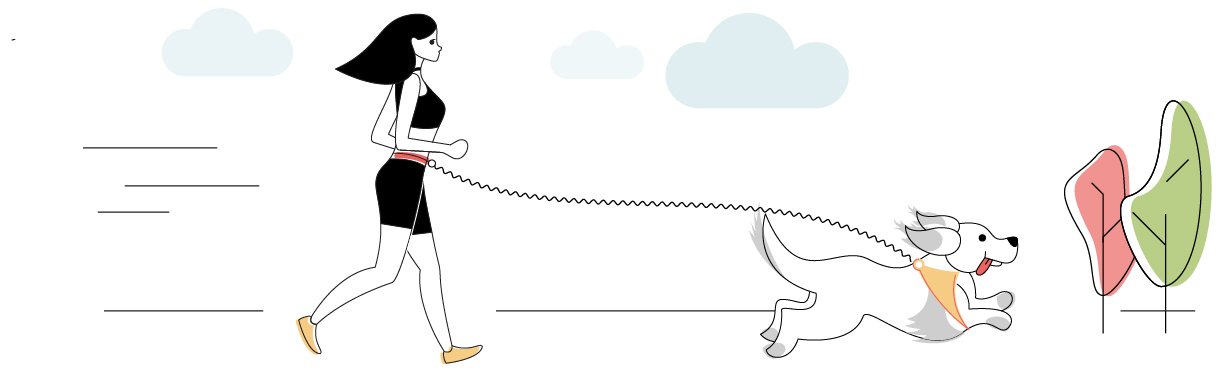
Running leashes are all about making sure that your dog is secure and comfortable, and your hands are free to move without fear of losing control. Typically, this comes from a 2-part design: an adjustable belt that slips around your waist and a leash that connects to your dog’s harness.
Please note: all of the leashes we reviewed should be used with a dog harness (see our best no-pull dog harness picks). A dog harness will give you more control over your dog and help prevent stress injuries. If you’re looking for a quick and easy pick for running, we love the Embark Adventure Harness. It’s padded, very secure, and sports an additional handle on the back for added safety.
There are a few features that come standard in most running leashes. Often, running leashes have shock-absorbing bungee built in, which helps to reduce pulling. Effective bungee is particularly important if you or your dog have any sort of back problems. Additionally, most running leashes come with at least one handle (many have two) to offer you immediate control in emergency situations.
When it comes to the waist belt, size and thickness are two extremely important factors. You want a waist belt size that gives you flexibility, so you can adjust as you figure out if you prefer a tighter or looser fit. Additionally, a thin waist belt can be lighter weight, but can also increase back pain if your dog is a puller. Lastly, some waist belts come with added padding for extra comfort and impact absorption.
If you’re used to conventional leashes, it may take a little bit of time for you and your dog to adjust to a running leash. The number one hurdle is overcoming the fear of losing control over your dog. If you’re used to gripping a leash with your hand, it can be difficult to trust that your dog is safe when the leash is tethered to your waist.
With that being said, we hope that these reviews can ease the transition by giving you peace of mind that the leash is an excellent, sturdy pick.
Building Up To The Run
Before you and your dog embark on your first run, it’s important to assess whether your dog is ready. There are some serious health concerns if you push your four-legged running companion too far too soon. So, be sure to work them gradually and understand what their limits are.
First and foremost, be sure you have a breed that’s fit for running. As unfortunate as it may be that you can’t take your Frenchie on a multi-mile run, it just isn’t safe. Your dog should be trained and healthy enough for it. For obvious reasons, dogs cannot tell you if they aren’t feeling well, and it’s unwise to suddenly take a couch potato dog out on a 10-mile run.
Additionally, hold off on running with a puppy until its bones have finished growing. The AKC puts that at about 6 to 8 months for small breeds, 12 months for medium breeds, 12 to 18 months for large breeds and 18 to 24 months for giant breeds (AKC). Their bones and joints aren’t ready for the repetitive impact before then, so check with your vet. Even once your dog is old enough, it’s important to consider what type of ground you and your dog are running on–your running shoes may have built-in support, cushion, and heat protection, but your dog’s pads don’t. For this reason, it can be best to stay off the asphalt and on more natural ground when possible.
Lastly, when in doubt, think about the kinds of things you’d do for yourself on a run and be sure you consider the same for your dog: don’t run them right after a big meal, bring plenty of water and stay hydrated, ensure adequate rest time, and take any injuries seriously.
The Cool Down
Running with your dog can be an amazing bonding experience, as well as an extremely healthy and relaxing routine. In order to create the overall best experience for you and your dog, it’s absolutely essential that you choose the right leash to fit your needs.
There are tons of options out there, some affordable and others worth every single penny, some with lots of give and others with lots of control, some rugged and durable and others lightweight and comfortable. We hope this guide helped you to navigate the incredibly varied landscape and choose the perfect hands-free running leash for you and your dog.
Please let us know which leash you went with, and happy running!
Hands-free dog leash FAQ
What is the best hands-free dog leash?
Of the 14 leashes we tested, the SparklyPets Hands Free Leash was our favorite, because you can clip your dog to a sliding point or a fixed point on the belt and it has two handles. The Tuff Mutt is a good alternative if you only want a sliding clip, and the Mighty Paw is the lowest-priced pick.
Are hands-free dog leashes good for running?
Yes, for a dog that already walks fairly well on a leash. Your hands and arms are free, and the pull goes to your hips instead of your shoulder. Pick one with a bungee to soften sudden pulls and a handle near your dog for quick control.
Are hands-free leashes safe for dogs that pull?
They can be, but a hard puller can tug you off balance and strain your lower back, and a bungee doesn’t teach a dog not to pull. Work on loose-leash walking first, use a harness, and keep a hand on the handle near your dog around traffic and other dogs. If your dog pulls hard on runs, a canicross belt with leg straps spreads the pull lower on your hips.
Sliding or fixed belt clip: which is better?
A sliding clip follows your dog when it switches sides or circles you, so you don’t get tangled. A fixed clip keeps your dog in one spot, which gives you more control and is handy when you stop. The SparklyPets has both.
Can I use a hands-free leash with a small dog?
Most hands-free leashes, including all four we tested, are made for medium and large dogs. Their bungees and hardware can be too heavy for a small dog, so look for a lighter leash made for small breeds.
Should my dog wear a collar or a harness with a hands-free leash?
A harness. All of the leashes we reviewed should be used with a harness, which gives you more control and is easier on your dog’s neck. See our best no-pull dog harness picks.